神奈川工科大学
研究推進機構 先進自動車研究所(VRI)
研究推進機構 先進自動車研究所(VRI)

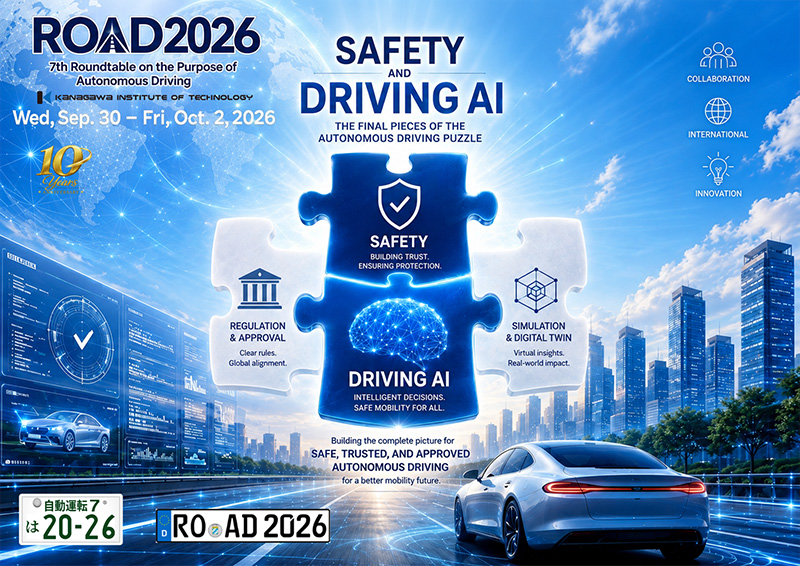

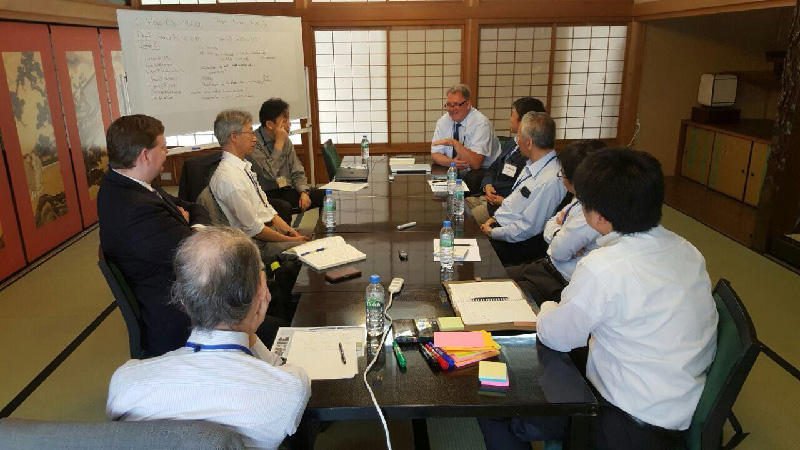
About ROAD: The "Roundtable on the Purpose of Autonomous Driving (ROAD)" conference series has evolved into a unique platform for interdis-ciplinary dialogue and international collaboration in the field of autonomous driving and autonomous mobility. Established in 2016, ROAD has brought together researchers, industry leaders, and public sector stakeholders from six countries across three continents.
The previous conference in 2024 focused on digital twins for autonomous driving, introducing verification methods based on demonstrations and simulations. Insights gained from this roundtable have highlighted current challenges in standardization, trust-building, and the alignment of simulation with reality. This review demonstrates that ROAD serves not only as a scientific forum but also as an active driver of international co-operation and innovation in mobility research.
Based on this background, the upcoming ROAD 2026 will focus on "safety” and "driving AI”—the final pieces of the autonomous driving puzzle—to advance discussions on establishing the foundational framework for ensuring safety quality and obtaining regula-tory approval for autonomous driving. We also intend to discuss the international commonalities and differences regarding the social value brought about by ADS vehicles in terms of automation, intelligent driving, and mobility.
We have established a total of five compelling themes for the Roundtable Workshops, consisting of two topics related to “The Last Piece” and three topics related to the social value of ADS, as shown below.
1) Roundtable Workshop 1 - Horizons of E2E Driving AI
→ Can AI Understand the Driving Environment Like Humans?
2) Roundtable Workshop 2 - Beyond the Unknown: Safety Cases for ADS
→ Can Safety Ever Be Proven?
3) Roundtable Workshop 3 - Envisioning Smart City Mobility
→ Can Smart City Mobility Bridge the Mobility Divide?
4) Roundtable Workshop 4 - Logistics Enhancement Through Autonomous Tracking
→ Will Logistics Become Human-Free?
5) Roundtable Workshop 5 - The Evolution of CASE: SDV/AIDV
→ Will Automakers Become AI Companies?
We hope you’ll all join us!


Quoted from
T. Haraguchi, Stefan-A. Schneider, The ROAD Series: A Success Story in Advancing Autonomous
Driving,
Proceedings of 8th International Symposium on Future Active Safety Technology towards Zero-
Traffic
Accidents 23-26 September 2025, Arles, France
| Chairperson: | Hideo INOUE, Kanagawa Institute of Technology, JAPAN |
|---|---|
| Vice Chairperson: | Stefan SCHNEIDER,University of Applied Sciences Kempten, GERMANY |
| Tetsunori HARAGUCHI, Nagoya University, JAPAN | |
| Committee Members: | Ichiro KAGEYAMA, Nihon University, JAPAN |
| Masashi YANAI, SEKISUI S-LEC B.V., THE NETHERLANDS | |
| Gerhard STEININGER, leap4, GERMANY | |
| Pongsathorn RAKSINCHAROENSAK, Tokyo University of Agriculture and Technology, JAPAN | |
| Kazuhiko HANAYA, Deloitte Tohmatsu LLC, JAPAN |
ROAD 2026 Secretariat
Email: pm-divp@ml.mail.ne.jp
Phone: +81-46-291-3067
Can AI Understand the Driving Environment Like Humans?
Moderator:
Gerhard STEININGER, leap4, GERMANY
Co-moderator:
Takeshi YAMATODA, IDAJ Co.,LTD, JAPAN
Recent advances in large-scale AI models have accelerated the development of End-to-End (E2E) autonomous driving systems. Unlike conventional autonomous driving architectures, which decompose driving into perception, prediction, planning, and control, E2E ap-proaches seek to learn driving behavior directly from data.
In this workshop, we aim to discuss whether driving intelligence will continue to be explicitly designed based on human tacit knowledge, or whether AI systems will be able to generate safe driving behavior on their own. We also seek to explore the opportuni-ties and challenges in areas such as end-to-end (E2E) architectures, foundational models, explainability, reliability, data-centric devel-opment, and regulatory approval. Together, we would like to consider how these technologies may shape the future of autonomous driving.
Key Questions:
Can Safety Ever Be Proven?
Moderator:
Pongsathorn RAKSINCHAROENSAK, Tokyo University of Agriculture and Technology, JAPAN
Co-moderator:
Yuichi SAITO, University of Tsukuba, JAPAN
Safety remains one of the greatest challenges facing Autonomous Driving Systems (ADS). Autonomous vehicles must not only per-form safely under known conditions but also respond appropriately to rare, unexpected, and previously unseen situations.
In this workshop, we would like to discuss how safety cases should be developed, evaluated, and accepted by regulators and society. We hope to explore the roles of scenario-based validation, simulation, digital twins, certification frameworks, and public acceptance. Together, we would like to consider what constitutes sufficient evidence of safety in an increasingly AI-driven world.
Key Questions:
Can Smart City Mobility Bridge the Mobility Divide?
Moderator:
Masashi YANAI, SEKISUI S-LEC B.V., THE NETHERLANDS
Co-moderator:
Tohru ISHIKAWA, BIPROGY Inc., JAPAN
Autonomous driving technology has the potential to transform not only transportation systems but also accessibility, social inclusion, and quality of life. While smart city initiatives often prioritize efficiency and convenience, one of the most critical challenges facing modern society is the widening “mobility divided” experienced by the elderly, people with disabilities, rural communities, and others with limited access to transportation.
In this workshop, we aim to discuss how autonomous driving can contribute to the realization of a more inclusive and accessible soci-ety. We intend to explore the roles that autonomous vehicles, public transportation, MaaS (Mobility-as-a-Service), and smart city in-telligence play in addressing mobility disparities and expanding transportation opportunities for all citizens.
Key Questions:
Will Logistics Become Human-Free?
Moderator:
Ichiro KAGEYAMA, Nihon University, JAPAN
Co-moderator:
Shoji ITO, Kanagawa Institute of Technology, JAPAN
Labor shortages, aging populations, and growing logistics demand are creating unprecedented challenges worldwide. Autonomous technologies are increasingly viewed as a key solution, but important technical, economic, and social questions remain.
In this workshop, we would like to discuss the future of autonomous logistics and supply chains. Topics such as autonomous trucks, platooning, delivery robots, drone logistics, economic viability, and regulatory frameworks will be explored. Together, we would like to consider how far logistics automation can realistically go.
Key Questions:
Will Automakers Become AI Companies?
Moderator:
Mohanad El-Haji, CEO & Member of the Executive Board at EDI AG, GERMANY
Co-moderator:
Ryuji SUGIOKA, Deloitte Tohmatsu LLC, JAPAN
The automotive industry is rapidly evolving from hardware-defined products to Software Defined Vehicles (SDVs) and AI Defined Ve-hicles (AIDVs). As vehicles become increasingly connected and intelligent, software, data, and AI are becoming key drivers of innova-tion and value creation.
In this workshop, we would like to discuss how SDVs and AIDVs will reshape vehicle development, customer experiences, and mobility services. We also hope to explore the growing roles of cloud platforms, AI technologies, and advanced semiconductor technologies in the future automotive ecosystem.
Key Questions:
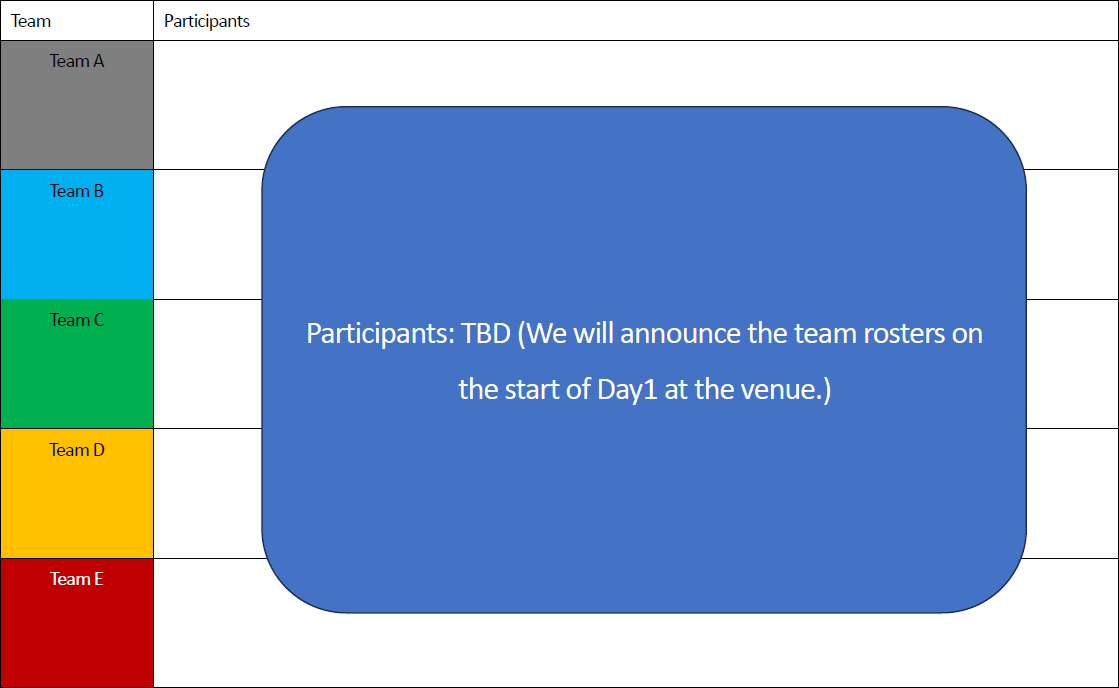
In this roundtable workshop, five discussion tables will be organized around five distinct themes, with participants divided into five groups (Teams A-E). Following each session, the teams will rotate to the next table, ensuring that all participants have the opportunity to engage in discussions on every theme over the course of the two-day program.

| Keynote 1 |
The Traditional Auto Industry's Final Chapter: The Autonomous Vehicle Forces a New Ecosystem by Mohanad El-Haji, CEO & Member of the Executive Board at EDI AG |
|---|---|
| Keynote 2 | City-Scale Agentic World Model for Virtual Testing of Autonomous Vehicle Deployment by Henry Liu, Professor and Director, University of Michigan Transportation Research Institute |
| Keynote 3 | Challenges of 3rd SIP on Smart Mobility Platform Development by Haruo Ishida, Professor Emeritus, the University of Tsukuba and Program Director of 3rd SIP on Smart Mobility Platform Development |
| Keynote 4 |
Consortium for Advancing Simulation Technology Related to the Human Mobility Society by Keisuke Suzuki, Professor, Kagawa University |
| Keynote 5 |
Mitigating Perceptual Risk and Sensory Uncertainty in Autonomous Driving: High-Fidelity and Robust Digital Twins via Physical, AI and Smart Data Reduction by Valentina Donzella, Professor, Queen Mary University of London (QMUL) |
| Keynote 6 |
Smart Infrastructure and Multimodal IoT Data Integration for Enhancing Vulnerable Road User Safety by Mona Jaber, Dr., Queen Mary University of London (QMUL) |
| Keynote 7 |
ISUZU's Vision and Strategy for Autonomous Logistics by Hiroshi Sato, Senior Executive Officer / SVP, Chief Officer for External Affairs / SVP, Engineering Division, Isuzu Motors Limited |
| Keynote 8 |
The Evolution of CASE: SDV/AIDV by Kazuhiko Hanaya, Director, Deloitte Tohmatsu LLC |
| Keynote 9 |
From Regulation to Road: European UNR-ADS Certification and the Validation Path to Provable Safety by Alexander Kraus, Chief Operating Officer, Instrumentation & Test Systems, AVL |
The Traditional Auto Industry's Final Chapter: The Autonomous Vehicle Forces a New Ecosystem
Dr. Mohanad El-Haji
CEO & Member of the Executive Board, EDI AG
Germany
Abstract:
The traditional automotive industry is reaching its final chapter, with artificial intelligence (AI) driving a fundamental transformation of its ecosystem. This keynote explores the transformative shift reshaping the industry, addressing three critical challenges: organizational capability gaps that limit adaptability, misaligned incentives where individual interests clash with collective progress, and the ecosystem’s collective action problem, which hampers collaboration and innovation.
To navigate this transition successfully, scaling AI expertise is essential. The aim is to reshape the incentives of the automotive industry: governmental initia-tives should treat data and data acquisition as public infrastructure, shifting competition to focus on who can build the best mobility system using this shared resource. Additionally, data critical to human safety must be treated as a public resource—its full potential realized only when accessible across the ecosys-tem. The rise of autonomous vehicles marks not just a change in how we drive but a complete reimagining of industry operations, collaboration, and inno-vation. This presentation explores these dynamics, offering insights into how stakeholders can lead the way toward a more connected, efficient, and sus-tainable future.
Short Biography:
Dr.-Ing. Mohanad El-Haji earned his Ph.D. in 2014 from the Karlsruhe Institute of Technology (KIT) in the field of Automotive Engineering with a dissertation titled “Ontology-Based Definition of Requirements for Validation Tools in Automotive Engineering.” In 2015, he co-founded EDI AG (originally EDI GmbH) alongside Dr.-Ing. Thomas Freudenmann and M.Sc. Heinrich Blatt. Their shared vision was to develop intelligent knowledge management solutions that empower organizations to transform data into actionable insights, driving innovation and efficiency. His core competencies include process optimization, formalization of expert knowledge, and product concept and design. He has been working in the field of digitalization for almost twenty years, beginning with his first research project at KIT in 2008.

City-Scale Agentic World Model for Virtual Testing of Autonomous Vehicle Deployment
Prof. Dr. Henry Liu
Professor, University of Michigan
Director, University of Michigan Transportation Research Institute (UMTRI)
USA
Abstract:
(To Be Announced)
Short Biography:
(To Be Announced)
Challenges of 3rd SIP on Smart Mobility Platform Development
Prof. Dr. Haruo Ishida
Professor Emeritus, University of Tsukuba
Program Director, 3rd SIP on Development of Smart Mobility Platform
Japan
Abstract:
(To Be Announced)
Short Biography:
(To Be Announced)
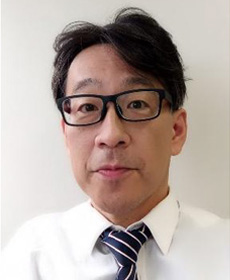
Consortium for Advancing Simulation Technology Related to the Human Mobility Society
Prof. Dr. Keisuke Suzuki
Professor, Kagawa University
Japan
Abstract:
As the landscape of mobility evolves, ensuring the safety and social acceptance of Autonomous Driving (AD) and Advanced Driver Assistance Systems (ADAS) remains a critical challenge. This keynote introduces the collaborative initiatives of the Consortium for Advancing Simulation Technology Related to the Human Mobility Society, launched to bridge industry, government, and academia. Our approach emphasizes a "Naturalistic Paradigm," utilizing multi-agent traffic simulation to conduct Virtual Proof of Concept (PoC) testing. Unlike conventional controlled experiments, our virtual testing environment integrates human cognitive traits and irrational decision-making. This enables the discovery of "unknown and unsafe" scenarios, which is crucial for ISO 21448 (SOTIF) compliance in AD systems. By linking dynamic virtual agents with automated systems, we can rigorously evaluate risk-taking behaviors in highly realistic traffic flows. Furthermore, I will discuss our future roadmap toward integrating digital twin technologies to evaluate environmental impacts and formulate human-centered design guidelines. Ultimately, this presentation will demonstrate how advanced simulation serves as a foundational platform for consensus building and mobility-centered urban development.
Short Biography:
Following his roles as a researcher at the Japan Automobile Research Institute (JARI) and a visiting researcher at the Swedish National Road and Transport Research Institute (VTI), he joined Kagawa University as a professor in 2009.
With a Ph.D. in Engineering and over 25 years of dedicated research, he has been at the forefront of developing "virtual testing" methods via driving simu-lators. His work extensively covers the social and user acceptance of Advanced Driver Assistance Systems (ADAS) and the optimization of ADAS human-machine interface (HMI) designs.
Driven by this extensive background, he founded the "Consortium for Advancing Simulation Technology for Human-Mobility Society" in 2024—an industry-academia-government initiative dedicated to shaping the future of virtual testing methodologies.
Mitigating Perceptual Risk and Sensory Uncertainty in Autonomous Driving:
High-Fidelity and Robust Digital Twins via Physical, AI and Smart Data Reduction
Prof. Dr. Valentina Donzella
Professor, Queen Mary University of London (QMUL)
UK
Abstract:
(To Be Announced)
Short Biography:
(To Be Announced)
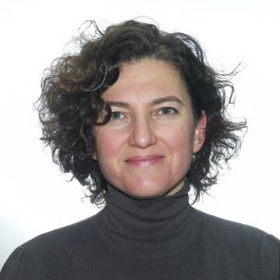
Smart Infrastructure and Multimodal IoT Data Integration for Enhancing Vulnerable Road User Safety
Dr. Mona Jaber
Queen Mary University of London (QMUL)
UK
Abstract:
Vulnerable road users, including pedestrians and cyclists, remain disproportionately exposed to road traffic risk, creating an urgent need for transport infra-structure that can better understand and respond to how people experience and navigate urban environments. This keynote explores how smart infra-structure, multimodal Internet of Things (IoT) sensing, and artificial intelligence can provide new capabilities for understanding and improving vulnerable road user safety.
Drawing on our recent research, the talk will present the DASMATE project (Distributed Acoustic Sensing for Modelling Active Travel), exploring how existing fibre-optic infrastructure can be transformed into large-scale sensing networks for detecting and modelling active travel. It will also introduce our ongoing cyclist safety project, which combines multimodal sensing with cyclists’ perceptions and experiences to understand why some roads feel safe while others do not, moving beyond conventional safety measures based primarily on reported collisions.
The keynote will explore how these emerging capabilities can support proactive safety assessment, evidence-based infrastructure interventions, and more inclusive transport systems that encourage active and sustainable mobility.
Short Biography:
Mona Jaber (Senior Member, IEEE) is currently a Reader in the Internet of Things (IoT) with the School of Electronic Engineering and Computer Science, Queen Mary University of London. Her research interests are at the intersection of machine learning and IoT in the context of sustainable development goals including IoT- driven digital twins. She secured the prestigious EPSRC New Investigator Award for a project entitled: Distributed Acoustic Sensor system for Modelling Active Travel in which she investigates machine learning methods for processing optical fibre signals that represent active travel. She is the founder and director of the Digital Twins for Sustainable Development Goals (DT4SDG) research laboratory at QMUL. Mona is the head of the Centre for Networks, Communications and Systems at QMUL and the secretary of the IEEE UK and Ireland Section 2025-26.
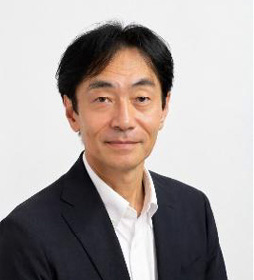
ISUZU's Vision and Strategy for Autonomous Logistics
Mr. Hiroshi Sato
Senior Executive Officer & Senior Vice President (SVP), Isuzu Motors Limited
Chief Officer for External Affairs & SVP, Engineering Division
Japan
Abstract:
Isuzu is advancing Level 4 autonomous driving technology to address driver shortages and improve logistics efficiency. This presentation highlights our tech-nological development, commercialization efforts, and vision for transforming the logistics industry, from autonomous vehicles to autonomous logistics.
Short Biography:
Hiroshi Sato leads autonomous driving development and commercialization at Isuzu Motors. He is responsible for advancing the deployment of Level 4 autonomous trucks and buses into real-world operations, helping shape the future of autonomous logistics.
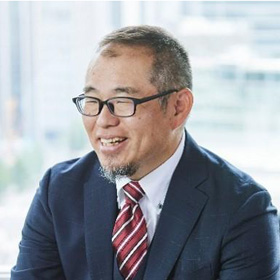
The Evolution of SDV/AIDV : Intelligence transformation
Mr. Kazuhiko Hanaya
Director, Deloitte Tohmatsu LLC
Japan
Abstract:
Artificial intelligence (AI) is updevolving mobility from a Software-defined vehicle to AI-defined vehicle(AIDV). As AI transform physical-AI and agentic-AI, intelligence is extending beyond digital environments into the fabric of society itself. This shift is redefining mobility not only as critical infrastructure for safe and sustainable societies, but also as a source of human inspiration and emotional value. Advancing such mobility transformation will require new interdis-ciplinary research at the intersection of intelligence, human experience, and societal systems. Academia is uniquely positioned to discover, nurture, and accelerate the innovations that will underpin this transition.
Short Biography:
After working in R&D at a major Japanese automotive OEM, including an assignment in North America, he joined Deloitte Japan. He has broad experience in strategy development and policy making support in Autonomous driving technology, SDV/AIDV mobility transformation and social transportation implementation as a solution for mobility divide, etc. Additionally, He reentry focusing on AI etc technology incubation to promote social/mobility intelligence transformation.
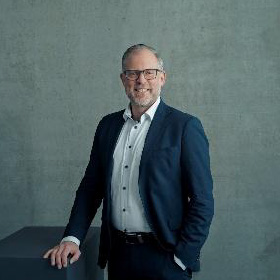
From Regulation to Road: European UNR-ADS Certification and the Validation Path to Provable Safety
Mr. Alexander Kraus
Chief Operating Officer, Instrumentation & Test Systems, AVL
Germany
Abstract:
Alexander Kraus has been Chief Operating Officer (COO) of AVL List GmbH since July 1, 2026. In this role, he has global responsibility for Instrumentation & Test Systems. His key focus areas include the strategic development of the business, international market and customer orientation, and the operational advancement of the business area. Until the end of June 2026, he was Managing Director of AVL Deutschland GmbH and Global Head of SDV & AD Homol-ogation. Prior to that, he spent more than two decades at TÜV SÜD, most recently as Chief Technology Officer of the Mobility Division. His experience includes international leadership responsibility, technological development, regulatory topics, and standardization in the mobility sector. Thematically, Alex-ander Kraus focuses on Instrumentation & Test Systems, Software-defined Vehicles (SDV), Automated Driving, Future Mobility, Innovation Leadership, global standards and regulation, and digital transformation in the mobility sector.
Short Biography:
Alexander Kraus has been Chief Operating Officer (COO) of AVL List GmbH since July 1, 2026. In this role, he has global responsibility for Instrumentation & Test Systems. His focus is on the strategic development of the portfolio, strengthening international market and customer orientation, and the operational advancement of the business area. Until the end of June 2026, he was Managing Director of AVL Deutschland GmbH and Global Head of SDV & AD Homol-ogation. Prior to that, he spent more than two decades at TÜV SÜD, most recently as Chief Technology Officer of the Mobility Division. Alexander Kraus has extensive international leadership experience, technological expertise, and a broad network across industry, regulation, and standardization. His work is centered around softwaredefined, automated, and sustainable mobility.
| Program Schedule Day 1 - Wednesday, September 30, 2026 | |
|---|---|
| 09:00 - 09:30 | Registration |
| 09:30 - 09:50 | Opening |
| 09:50 - 10:20 | Keynote 1 |
| 10:20 - 11:00 | Keynote 2 |
| 11:00 - 11:20 | Break |
| 11:20 - 11:50 | Keynote 3 |
| 11:50 - 12:20 | Keynote 4 |
| 12:20 - 13:20 | Lunch |
| 13:20 - 13:40 | Introduction of Roundtable Workshop |
| 13:40 - 15:10 | Roundtable Workshop 1 |
| 15:10 - 15:20 | Break |
| 15:20 - 16:50 | Roundtable Workshop 2 |
| 16:50 - 17:00 | Break |
| 17:00 - 18:30 | Roundtable Workshop 3 |
| 18:45 - | Welcome Reception (KAIT D2) |
| Program Schedule Day 2 - Thursday, October 1, 2026 | |
|---|---|
| 08:45 - 08:55 | Registration |
| 08:55 - 09:00 | Opening |
| 09:00 - 09:30 | Keynote 5 |
| 09:30 - 10:00 | Keynote 6 |
| 10:00 - 10:20 | Break |
| 10:20 - 10:50 | Keynote 7 |
| 10:50 - 11:20 | Keynote 8 |
| 11:20 - 11:40 | Break |
| 11:40 - 12:10 | Keynote 9 |
| 12:10 - 13:10 | Lunch |
| 13:10 - 14:40 | Roundtable Workshop 4 |
| 14:40 - 14:50 | Break |
| 14:50 - 16:20 | Roundtable Workshop 5 |
| 16:20 - 16:30 | Break |
| 16:30 - 17:00 | Wrap up of ROAD 2026 |
| 17:00 - 17:30 | Closing |
| 17:30 - 18:30 | Transit to Jinya, Tsurumaki-Onsen (Bus) |
| 18:30 - | Conference dinner (Jinya, Japanese traditional restaurant) |
| Program Schedule Day 3 - Friday, October 2, 2026 | |
|---|---|
| 09:00 - 14:00 | Visit1: Nissan Technical Center, Driving Simulator (Atsugi, Kanagawa) |
| Visit2: Forum8, VR Simulator (Shinagawa, Tokyo) | |
| Visit3: KAIT Lab Tour (KAIT) | |
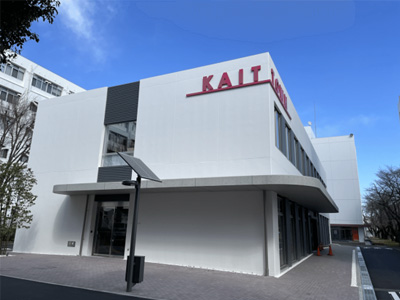
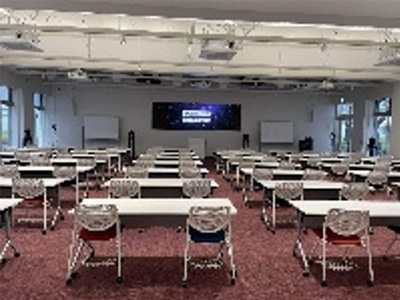
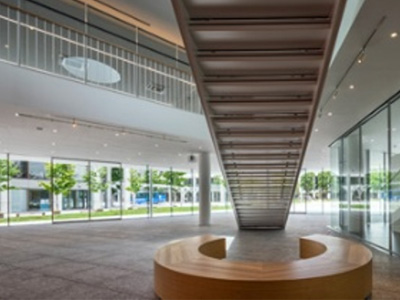
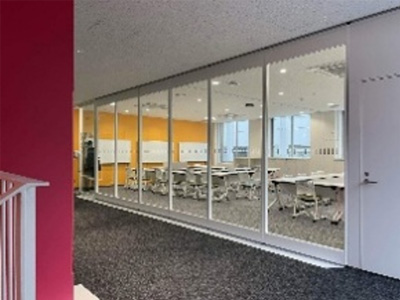
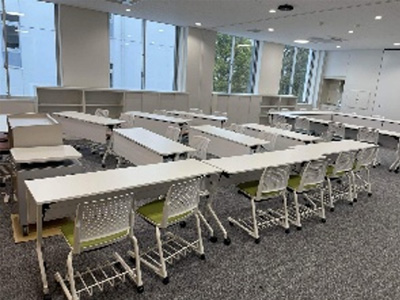

Kanagawa Institute of Technology
1030 Shimo-ogino, Atsugi-shi, Kanagawa 243-0292, Japan
Contact: ROAD 2026 Secretariat, Phone: +81-46-291-3067, Email: pm-divp@ml.mail.ne.jp
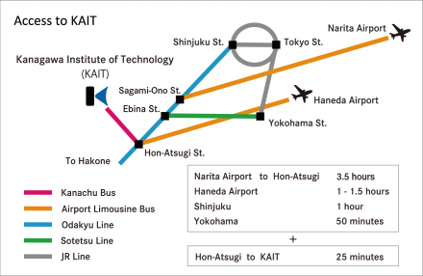

To book your room and receive a special rate, please follow the steps below:
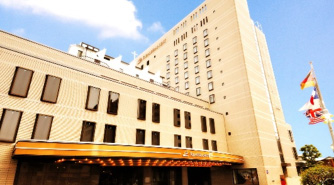 |
REMBRANDT HOTEL ATSUGI Single occupancy rate: ¥12,500 per night Email: atsugi.rooms@rembrandt-hotel.co.jp Tel: (+81)46-221-0001
|
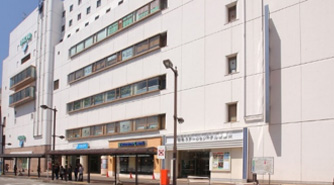 |
ODAKYU STATION HOTEL HON-ATSUGI
|
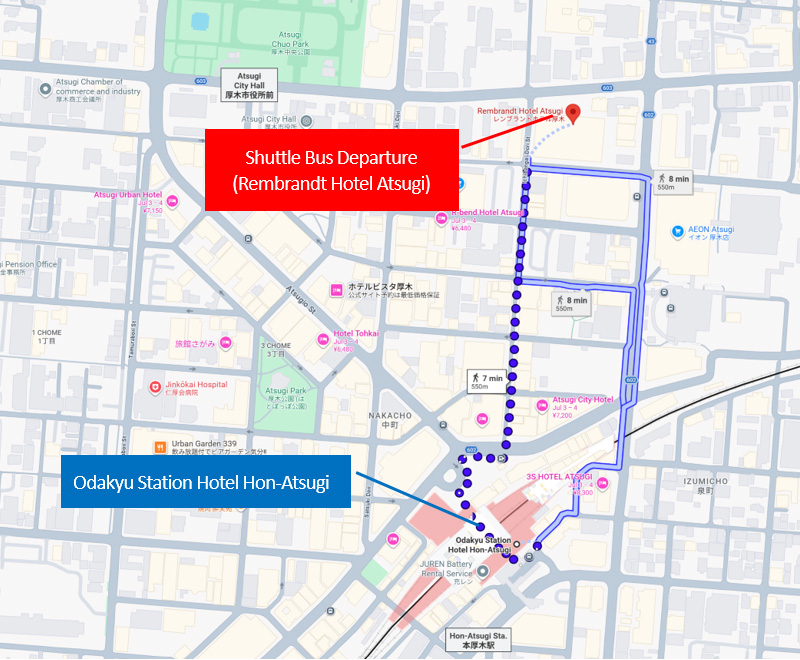
The shuttle bus departs from Rembrandt Hotel Atsugi.
If you are staying at Odakyu Station Hotel Hon-Atsugi, please walk to the Rembrandt Hotel main entrance (approx. 7 min. walk).
(Note: This schedule applies only to September 30 and October 1.)
Registration Closed
We are pleased to announce that participant registration for ROAD 2026 has now been closed.
Due to the overwhelming response and the limited capacity of the symposium, we are unable to accept any further registrations.
We regret that we are unable to accommodate additional participants and appreciate your understanding.
The Organizing Committee sincerely thanks all applicants for their interest in ROAD 2026 and for their enthusiasm in supporting this international forum.
We look forward to welcoming registered participants and fostering fruitful discussions throughout the symposium.
We kindly invite professionals and experts from around the world to register for ROAD 2026. Please complete your registration using the form below to secure your participation.
We look forward to your valuable insights and contributions to our discussions.





















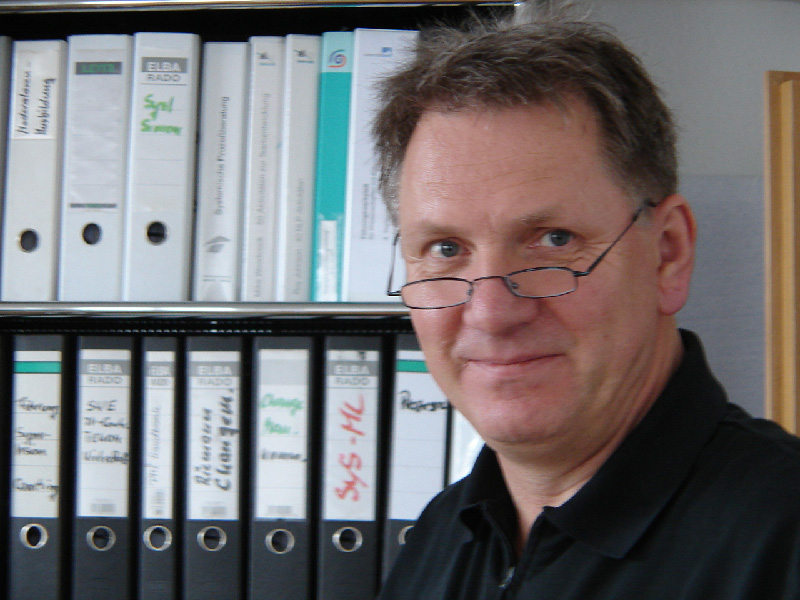
The ROAD community mourns the passing of Dr. Jürgen Stübner, who died unexpectedly on June 25, 2026, at the age of 71.
Dr. Stübner was a lecturer at Kempten University of Applied Sciences and a valued member of the ROAD community from its very beginning in 2016. Over the course of ten years, he accompanied and supported the development of ROAD, contributing his professional experience, academic perspective and strong personal commitment to international exchange and friendship. He later served as a member of the ROAD 2024 Committee.
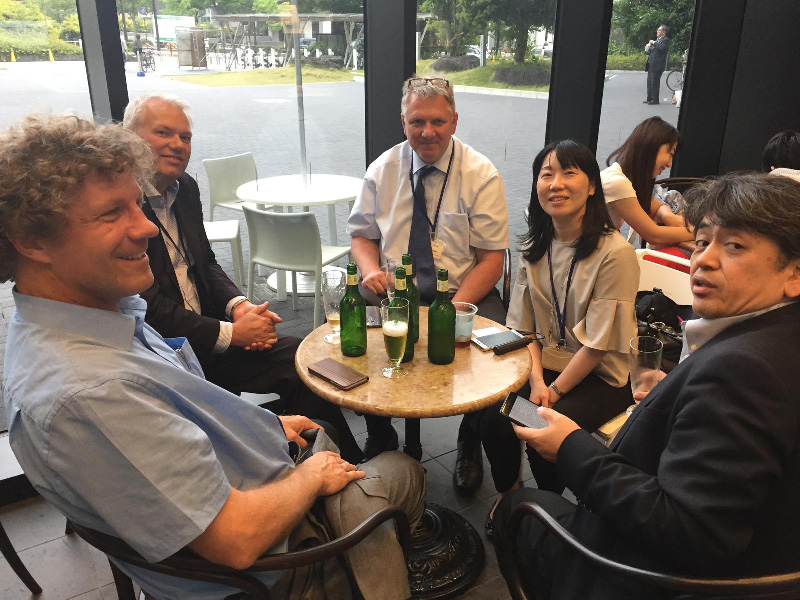
One early memory captures his spirit particularly well. During the first ROAD meeting in 2016, it was Jürgen’s idea to take the Japanese guests to Neuschwanstein Castle at sunrise. He wanted them to experience this remarkable place in a very special and unforgettable way. This thoughtful initiative reflected the enthusiasm, hospitality and personal dedication that he brought to ROAD.
Jürgen’s professional career was characterised by remarkable versatility. After studying agricultural engineering and receiving his doctorate in 1985, he worked at the University of Rostock and subsequently in the fields of planning and logistics. Following German reunification, he began a new professional chapter that took him to BMW in Munich and later into independent management consulting.
Alongside his professional work, he remained deeply committed to education. As a lecturer at Hochschule Geisenheim University and at the Faculty of Electrical Engineering of Kempten University of Applied Sciences, he shared his broad experience with younger generations. His teaching in Kempten included subjects at the intersection of technology, people and mobility.
We remember Jürgen Stübner as a dedicated teacher, an energetic contributor and a trusted colleague. His openness, intellectual curiosity and commitment to bringing people together will remain part of the spirit of ROAD.
At ROAD 2026, ten years after he joined the very first ROAD meeting, we will honour his memory with a moment of silence.
Our thoughts are with his family and all those who were close to him.
Optional link:
https://bestattungshaus-kuhnke.gemeinsam-trauern.net/Begleiten/juergen-stuebner/Album
Read the full tribute to Dr. Jürgen Stübner.